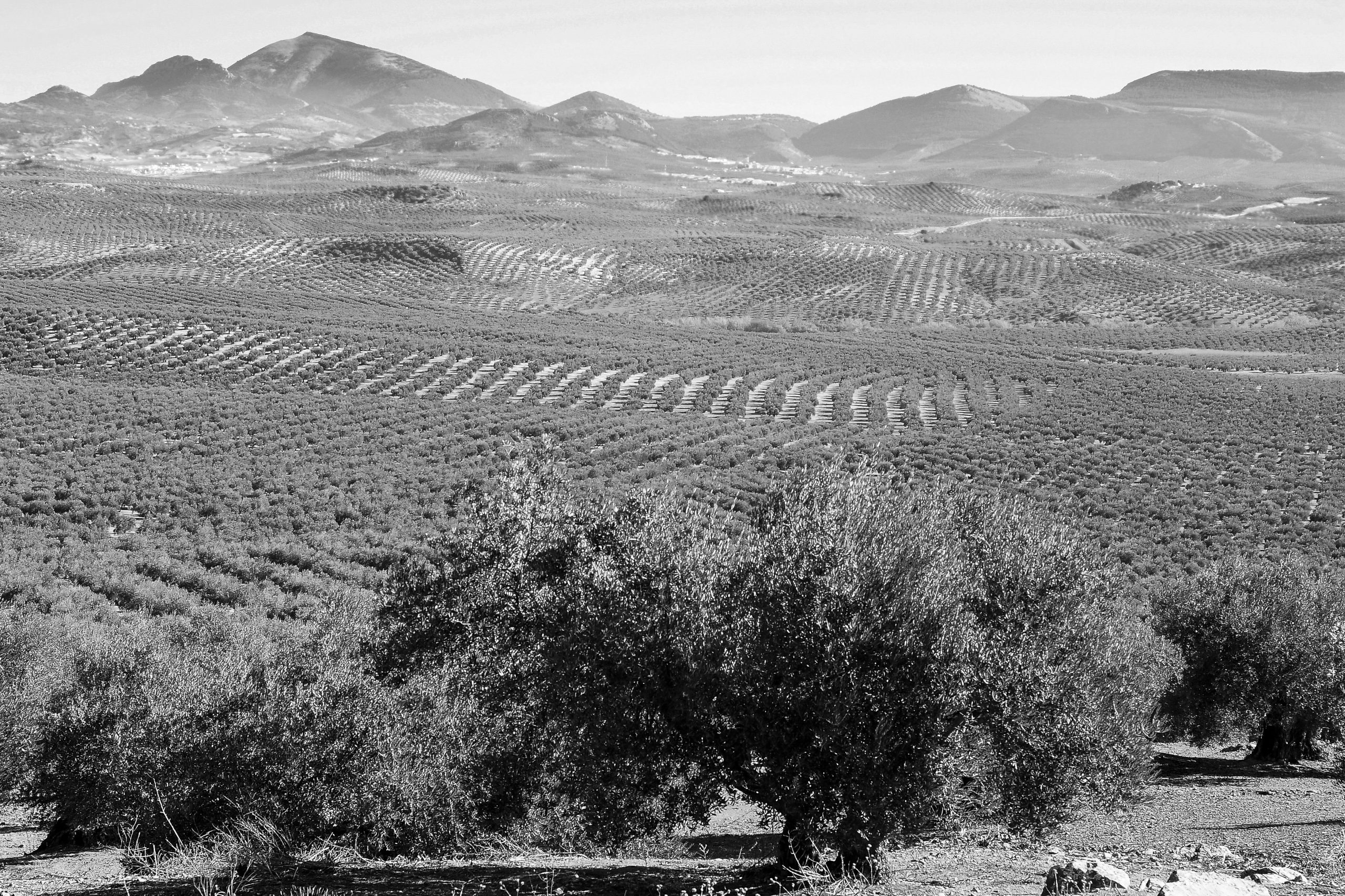
Photo by Nicholas Coleman
Coleman Collection #38
PRODUCER
Tierra Callada
CULTIVAR
Picual
Harvest Date
October, 2024
REGION
Torredonjimeno, Spain
Joan Gonzalez-Bueno Uribe founded Tierra Callada in Spain after moving to the USA in 2014 to bring to this market his holistic connection to the trees, the land, and the surrounding environment.
The Torredonjimeno, the locality within Jaén where the Cortijo Uribe family has lived for generations, has hot summers, mild winters and relatively low rainfall, making it one of the world’s best climates for olive cultivation.
Tierra Callada dry-farms its olive trees, relying on natural rainfall for growth and employing modern technology, while respecting the purity of the cultivation and the historical essence of the region.
Tierra Callada cultivars 6,000 Picual olive trees covering 60 hectares. The groves are divided into two sections: “Las Viejas” (The Old Ones) and “Las Nuevas” (The New Ones). Las Nuevas consists of trees that are about 50 years old…already mature but still relatively young. The Las Viejas grove on the other hand dates to the 18th century. Both disease and drought resistant groves are arranged in the traditional spacing system that defines the regions landscape.
These Picual olives are harvested early in the season while still green, and cold-extracted below 22 degrees Celsius through state-of-the-art GEA machinery. The result is a robust and vibrant oil with undertones of green tomato leaf alongside high levels of phenolic compounds, which have both anti-inflammatory and antioxidant properties.
Whether or not olive oil should be filtered has long been debated but in recent years there is almost universal consensus that filtering is the best practice. At Tierra Callada, the oil first enters conical-bottom decanting tanks, where it undergoes a natural decantation process. This allows solid residues to settle at the bottom, making the later cellulose filtration process more efficient. The oil is stored in large stainless steel tanks with inert nitrogen gas at an optimal temperature of 15-20 degrees Celsius to prevent oxidation and to preserve the oil’s freshness and quality.
Though Spain has more land under vine than any other country it doesn’t produce the most wine. That honor reliably shifts between France and Italy. Greater spacing between Spanish vines produces lower grape yields resulting in less wine. In some pro-Spanish wine circles, it’s called “quality control”. Proponents champion the virtues of hand-harvesting, local varieties, and low yields.
Thankfully, Spain’s producers also have an eye towards value and continually create products with unparalleled quality for the price. For your spring and summer cuisine explore the whites of northern Spain appellation Rias Baixas, where producers highlight the indigenous Albariño grape. Fleshy, fresh, and bright, the wines embody the breadth of Spanish winemaking and are full-flavored and food-friendly. For the latest and greatest in Albariño wines, seek out brands Granbazan, Croque, and Castro de Balar.